40% of Australian GLP-1 users say their new drinking habits are here to stay
Four in ten Australian GLP-1 users (40%) expect their changed drinking habits to become permanent lifestyle habits, while just 6% think the changes will last only as long as they remain on the medication.
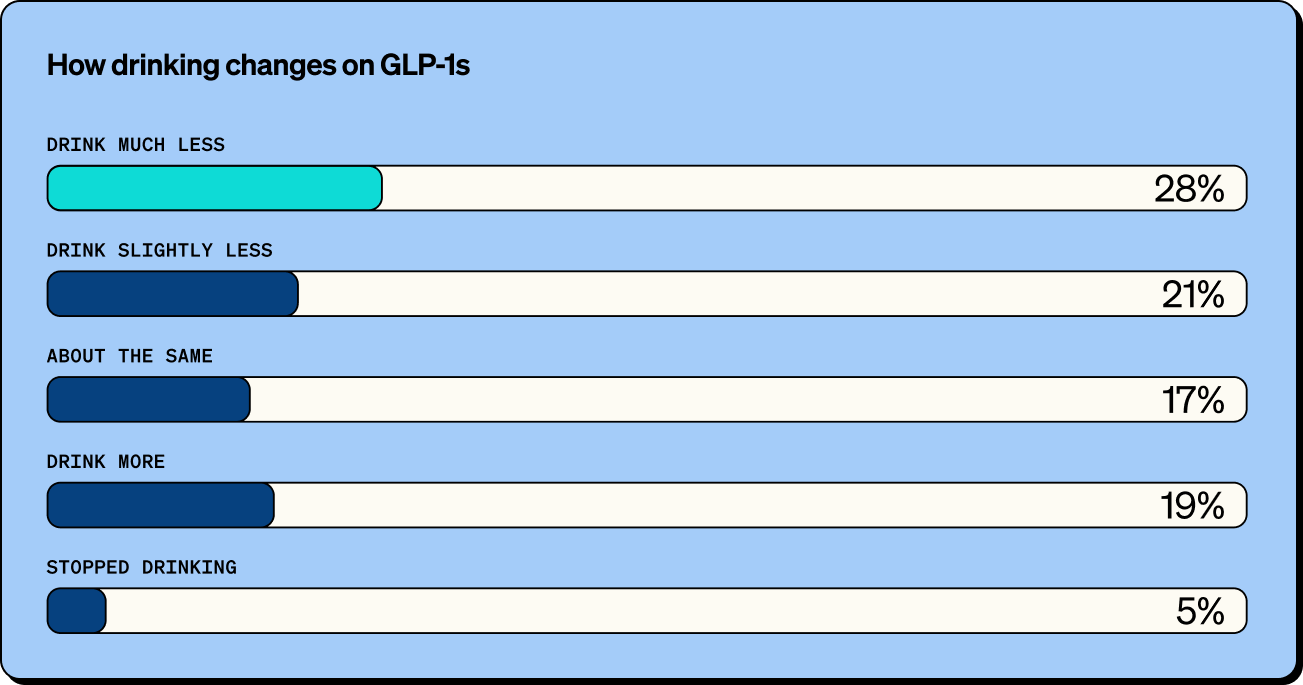
Complete abstinence remains relatively rare. Only 5% of users say they have stopped drinking altogether. Instead, people are ordering fewer drinks, consuming less on each occasion and becoming more selective about what they choose to drink.
The shift in drinking isn’t translating directly into fewer social occasions.
Almost a quarter (23%) of GLP-1 users say they attend social occasions just as often but drink less when they’re there, while 32% say their social habits haven’t changed at all.
The emerging behavior suggests socialising and alcohol consumption are becoming less tightly linked. For drinks brands, that puts greater pressure on what earns a place in a smaller drinking occasion.
The biggest influences on reduced alcohol consumption are physiological and health-related.
Fewer cravings leads at 32%, followed by broader health goals at 29% and feeling full sooner at 28%. These factors outweigh social pressure and cost as reasons for drinking less.
The findings point to moderation becoming a longer-term behavior among GLP-1 users, particularly when four in ten already expect their new habits to continue beyond the medication.
- Why lower-alcohol products are outperforming alcohol-free alternatives among GLP-1 users
- How social occasions are changing as attendance holds and consumption falls
- What is driving the pullback in alcohol
- How long users expect to stay on GLP-1 medications and what that means for the category
- Where drinks brands can respond and how to test emerging opportunities