GLP-1 users are cutting delivery before fast food, new Australian research finds
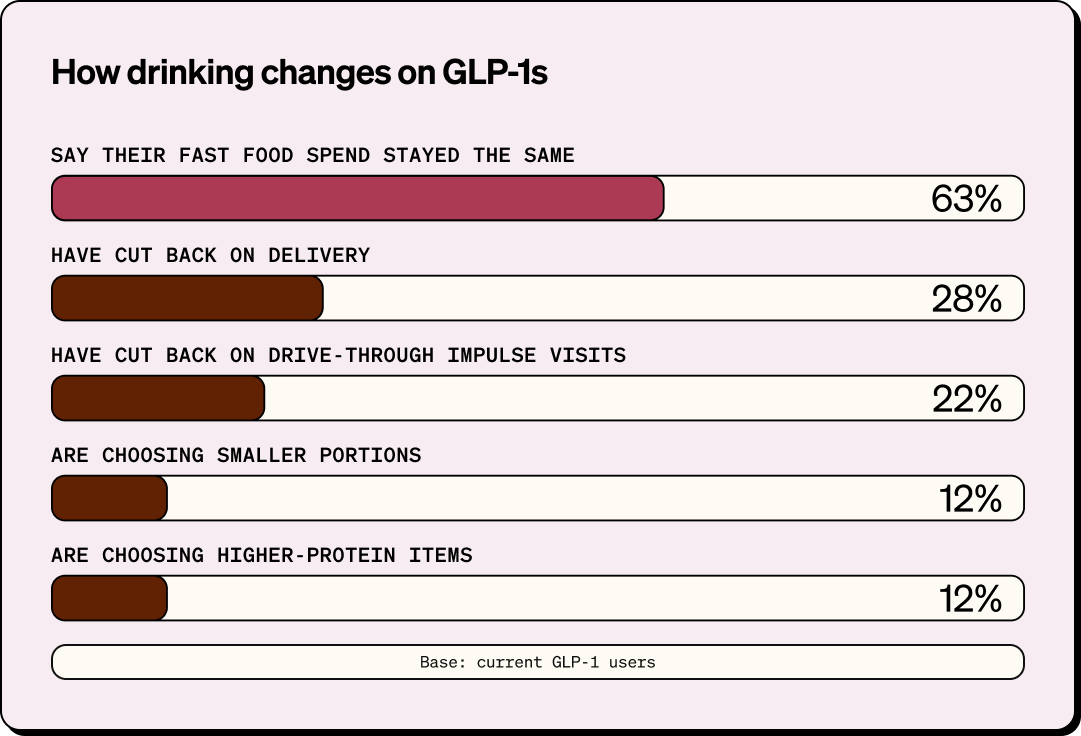
Almost two thirds (63%) of Australian GLP-1 users say their typical fast food spend has stayed the same, while four in ten haven’t changed what they order.
Among those changing their habits, the shift is towards higher-protein items, smaller portions and simpler orders.
Delivery is seeing the biggest pullback, with 28% of GLP-1 users ordering it less often. Drive-through impulse visits follow at 22%, while 18% have cut back on late-night orders.
Planned occasions are proving more resilient. Just 9% have reduced weekend family meals and 6% have cut back on workday lunches.
The pattern suggests convenience alone may be becoming less powerful as an eating trigger. More spontaneous occasions are falling away faster, while meals attached to established routines are holding up.
The classic fast food meal deal could also come under pressure.
When asked which parts of a typical fast food order they would be least willing to give up, 58% of GLP-1 users chose the main item. Sides and drinks proved more expendable.
That creates an opportunity to rethink the structure of the meal around the part consumers value most, particularly as smaller appetites make larger bundles harder to justify.
Better ingredients top the list of improvements GLP-1 users want from fast food brands, selected by 24%.
Half-size meals at a lower price and high-protein mains follow at 15% each.
For brands, smaller formats will need to deliver on value as well as portion size. Consumers are showing interest in eating less, but they still expect the price to reflect what they’re getting.
The category is already moving in this direction. Smaller formats and protein-forward menu items increasingly feature across major QSR menus, aligning with the broader shift towards more selective eating.
As appetites shrink, fast food still has a place. The opportunity for brands is to make that occasion work harder through better ingredients, flexible portions and orders designed around what consumers value most.
- The occasions under pressure, as delivery and impulse visits decline while planned meals hold
- Why the classic meal deal needs to flex, with 58% calling the main item non-negotiable
- Why better ingredients top the improvement wishlist at 24%
- How smaller portions and pricing are changing the value equation
- Where QSR brands can respond and how to test emerging opportunities