RESEARCH
GLP-1
One in Three American GLP-1 Users Are Drinking Less
GLP-1s are doing something to alcohol that no other category is seeing. Most effects fade when the drug stops. Food noise comes back. Appetite comes back. But 23% of current users say alcohol became less appealing as an unexpected side effect, and among people who've stopped taking the medication, that figure holds at 24%. The lower interest in drinking outlasts the prescription, and it's spreading: considerers are drinking less at almost the same rate as current users.
This report breaks down what that means for alcohol. Why the pullback persists after treatment ends, why non-alcoholic alternatives aren't absorbing the demand, and where the opportunity opens up for new products, occasions and experiences.
This report breaks down what that means for alcohol. Why the pullback persists after treatment ends, why non-alcoholic alternatives aren't absorbing the demand, and where the opportunity opens up for new products, occasions and experiences.
INSIDE THE REPORT
- The persistence effect, and why alcohol breaks the pattern of every other GLP-1 side effect
- A new drinking baseline: current users, considerers and lapsed users are all drinking less
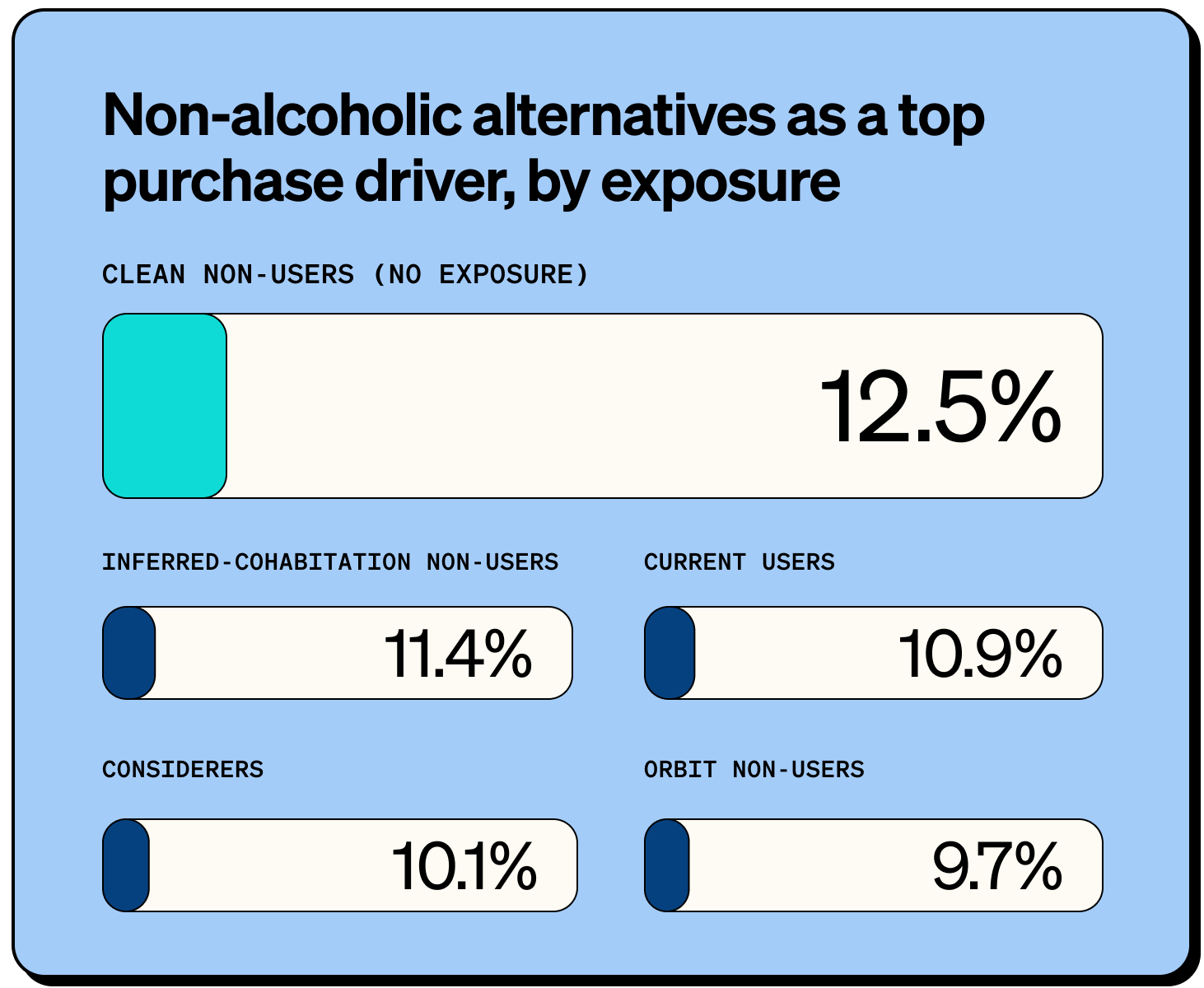
- Why non-alcoholic alternatives aren't inheriting the pullback
- The dinner-party shift: non-users in GLP-1 households are 1.8x more likely to notice friends drinking less
- Where the category goes next, and how to test against it