RESEARCH
GLP-1
How GLP-1s Are Reshaping the Way Australia Eats and Drinks
New Ideally research reveals how GLP-1s are changing Australia’s appetite, from grocery baskets and snacking to fast food, alcohol, taste and fibre.
GLP-1s are starting to reshape far more than weight loss.
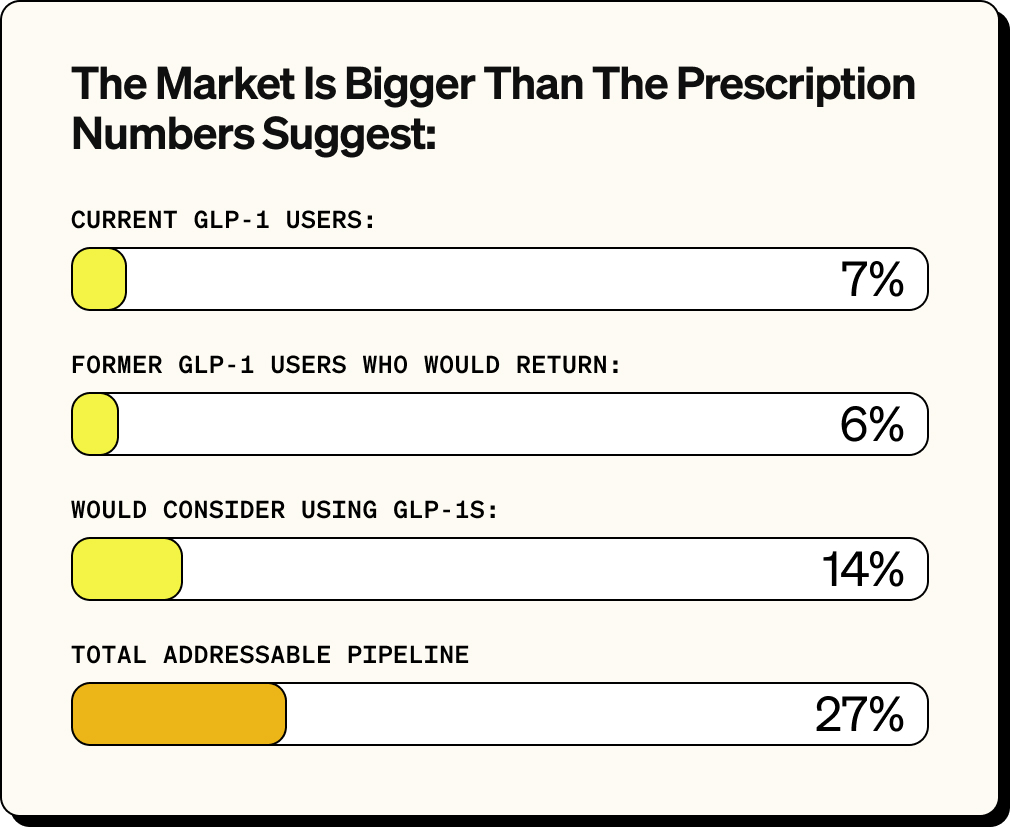
Across Australia, the medications are changing how people eat, what they buy, how much they drink and what they expect from food and beverage brands. While 7% of Australians currently use a GLP-1 medication, another 14% would consider taking one and 6% have used one before and would do so again. Together, that represents a potential GLP-1 audience of 27% of Australian adults.
Our latest Ideally Investigates: GLP-1 in Australia report looks at what happens once appetite starts to change, and how those shifts are showing up across everyday food and drink behaviour.

INSIDE THE REPORT
- The GLP-1 audience is much bigger than current users alone. Australia’s potential GLP-1 audience reaches 27% once current users, former users who would return and people considering treatment are included.
- Snacking is under pressure. Almost three in four current users say they snack less often than before, while 58% are buying fewer sweet snacks. At the same time, 48% are buying more high-protein foods.
- Fast food is changing, rather than disappearing. GLP-1 users are moving towards smaller portions, higher-protein options and simpler orders, while delivery and impulse occasions are being cut back first.
- Alcohol consumption is becoming more intentional. Almost half of Australian GLP-1 users say they now drink less, while only 5% have stopped drinking altogether. Many are still socialising, but consuming less when they do.
- Taste itself may be changing. Almost half of current and former users say food tastes more intense since starting treatment, with sweetness among the flavours changing most.
- Fibre habits may have staying power. More than half of current and former users say they eat more fibre than before starting treatment, and almost half of former users continue to report higher fibre intake after coming off the medication.
- What this means for brands. We analyse what this means for the future of FMCG brands.