

How Ideally built the storytelling engine for the GEO era
The new rules of being found
When someone asks ChatGPT or Claude a question about your category, the answer they get back isn't random. It's built from sources the model has judged credible.
Recent Muck Rack analysis of citations in generative AI tools found 94% come from non-paid media. Earned media accounts for 82%. Paid is a rounding error in the systems that increasingly decide who shows up and who doesn't.
Gartner predicts PR and earned media budgets will double by 2027 as AI replaces traditional search. AI systems reward brands that are written about, talked about and trusted. Every piece of credible coverage now does two jobs: it reaches today's reader, and trains tomorrow's answer engine.
This is GEO, generative engine optimisation (sometimes called AEO, answer engine optimisation). The practice of showing up inside AI-generated answers. The mechanics are simple enough: answer engines reward sources that are credible, citable, and referenced consistently across the web. A brand running a steady programme of proprietary research and thought leadership in quality outlets is building exactly the signal GEO rewards.
What this asks of research
PR teams have lived with the same problem for years. Research that could give a story real weight takes too long, costs too much, and can't be run often enough to sustain a programme. A bespoke study runs six weeks and a multiple of what most comms budgets can absorb on repeat. So research gets used once or twice a year, or not at all. Stories that could have landed a quarter ago stay in someone's drafts.
That model no longer fits the moment. When 94% of AI citations come from non-paid media, the speed at which you can produce credible, attributable data isn't a production question. It's a discoverability one.
Ideally was built to close that gap. Real consumer responses, nationally representative samples, researcher-designed frameworks, delivered overnight at a fraction of traditional cost. Fast enough to catch a cultural moment. Repeatable enough to sustain a programme across a year. Credible enough to earn coverage in the outlets that matter, which are the same outlets AI systems cite.
From survey to storytelling engine
Most brands run one big study a year. The stronger approach is a storytelling engine built on three layers:
Planned tentpoles. Bigger quarterly or bi-monthly research-led stories that anchor brand narratives. Same rhythm as a content calendar, same authority as a report.
Reactive quick dips. Fast-turn surveys tied to moments in culture, media or the category. The stat that lets a brand jump into a live conversation with something to say.
Repeatable output. A consistent flow of evidence-backed stories. The compounding part of the system.
Ideally lets you run all three from the same place. Teams can plan the year's bigger narratives in advance and still have capacity to move on a moment the day it breaks, without a separate supplier, scoping call or cost.
Each study produces a new citeable asset. Each asset expands the brand's footprint across the web. Over twelve months, a brand running three to four research-led stories per quarter can build a source library that AI systems will draw from for years.
In practice
Betty's Burgers extends a launch into prime-time
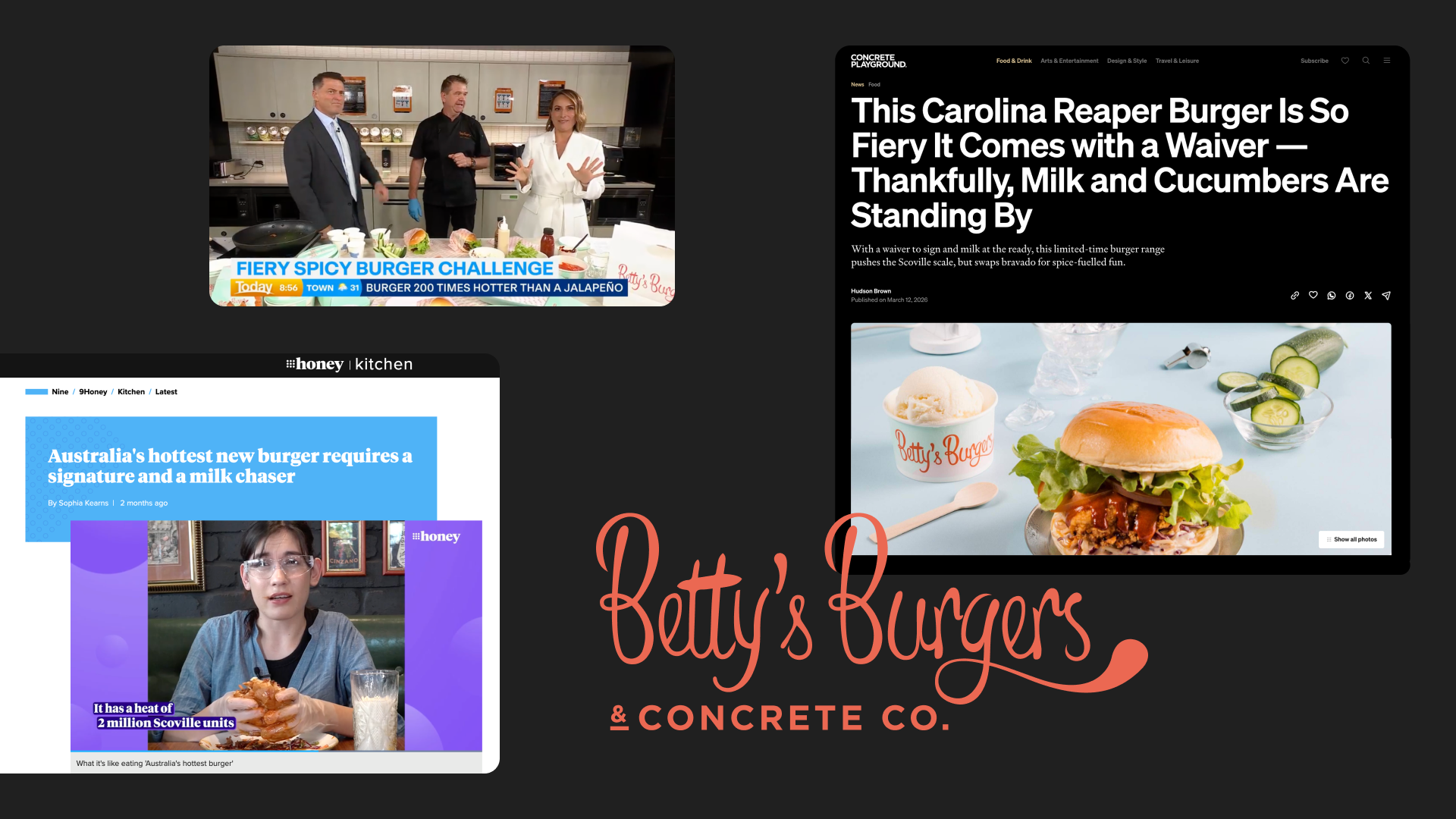
Betty's Burgers, the Australian burger chain, was preparing the launch of its new Madman Burger, hot enough that customers had to sign a waiver before eating it. The product was built to be a talking point, and the launch was built around it: a full integrated campaign designed to land from day one.
Working with Ideally, the team layered in a research moment to evolve the story and extend cut-through beyond the initial launch beat. A three-question survey to 1,000 Australians overnight, not about the burger itself, but about the appetite for extreme food challenges. The insight came back clean and pitchable: one in three Australians say they're eager to take on an extreme food challenge.
That stat opened a second wave. The story moved from product news into a behavioural conversation about how people want to experience challenge right now, and the campaign landed a five-minute prime-time segment on the Today Show, hosts taking on the challenge live, branded Betty's products in frame.
Newsjacking the news cycle
A large financial services brand uses Ideally to turn live news cycles into earned media. When fuel price volatility and cost-of-living anxiety started dominating coverage, the team ran an overnight, nationally representative survey designed around the moment. Fielded, analysed and ready to pitch within ten working days. The story landed across multiple outlets, referenced in follow-up reporting and indexed as a credible source on a topic buyers were actively searching. The team now runs a two-track programme on Ideally: planned tentpoles feeding quarterly narratives, reactive surveys for news-moment windows. A growing library of owned data, visible across the sources AI systems cite.
The opportunity
If you're running PR, comms or insight at a brand that wants to show up in the answers buyers are getting from AI, this is the moment to talk.
Book a demo and we'll walk you through what an ongoing story engine looks like, built for your category, your audience, and the moments you'll want to own.


