Ideally Canvas: What I Wish Existed When I Ran Insights Teams
For fifteen years I ran insights teams, which mostly meant I was the person other people came to when they needed to know something about their category and needed it yesterday. I was the human search engine sitting on top of a very expensive document. It worked, sort of. It also drove me a little mad. So when I say the way we do category insight is broken, I'm not theorising. I lived inside the problem long enough to want to fix it.
Running Insights for Asahi across ANZ, Portfolio Management Review (PMR) was part of the gig. A monthly forum inside the integrated business planning process, where strategy got set and progress against it got managed. Underneath all of it sat one question for the exec team: how do we grow with the brands we have, and know what else we need through innovation or acquisition?
You can't answer that without knowing your consumers. How they tick, where the incremental opportunity spaces are, and how to mobilise a business against them.
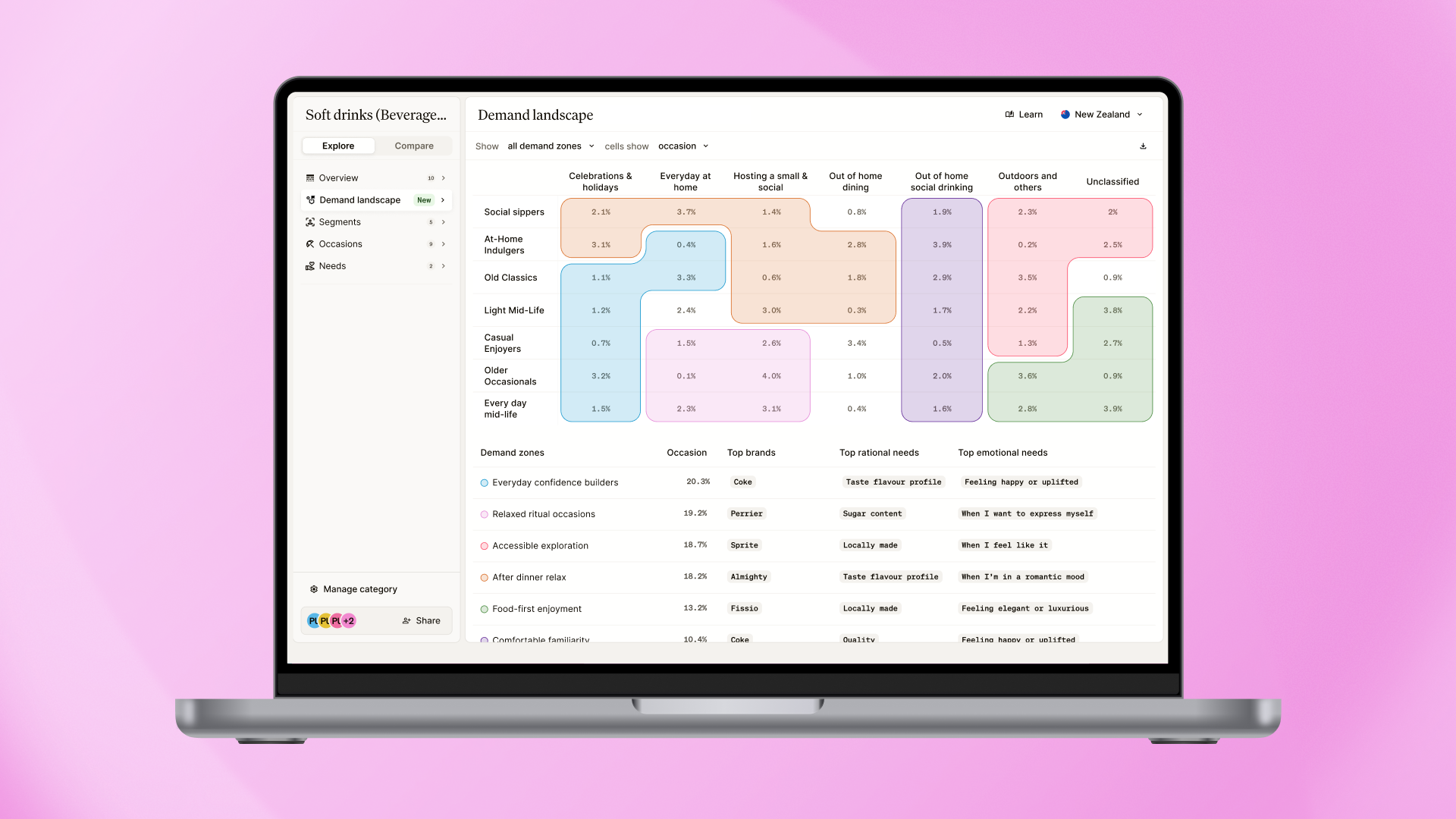
The prize was a map of your world. Deep enough to be trusted, simple enough to be shared. A common language the whole business rallies around, so everyone from the exec team to the brand manager is pointing at the same growth opportunity.
I got that map once. It took a great agency, months, senior bandwidth, and hundreds of thousands of dollars. You get a lot for that, maybe more than you need. A 144-page PDF where some is must-have and most is nice-to-have.
Because it's so hard and expensive, you can only do it every few years. The data dates. It lives in a document that one insights person has to manually farm for every tactical need, and it never connects to what you're actually building: the NPD chasing a new occasion, the brand repositioning aimed at a demand zone.
You end up sticky-taping numbers together across docs and systems. Experts are required to run it, and to make sense of what it gives you. This kind of power has only ever belonged to the big players. And even they could rarely afford to use it properly.

Here's what I actually believe, after years of running insights teams: insight without influence is worthless. You can hand someone the smartest, truest finding in the world, and if it doesn't move them to act, you've solved nothing. Influence isn't a nice-to-have bolted onto insight. It's the whole point.
Influence comes from a shared language everyone understands, a framework that makes complexity feel simple, and design that makes people want to lean in rather than switch off. That's what a 144-page PDF almost never gives you. It's what we set out to build instead.
What if you only paid for what you need? A diet demand landscape: segmentation and core U&A, nothing you'll never open. What if it connected straight into what you're building next, so when you find a demand zone worth chasing, you build an idea and test it against that zone in the same platform. Find your target, hit your target.
What if no experts were required? Just a business question, and instant insight the moment it's built.
Now imagine we put an AI agent on top. One that lives inside the platform, reads the landscape, knows the segments, and answers back in plain language. Suddenly the map doesn't just exist, it talks. Anyone can ask it a question and get an expert's answer. Everyone becomes the insights person.
Here's the part I care about just as much: this isn't about replacing insights professionals. It's about turbo-charging them. Give an insights team a living demand landscape and an agent that does the fishing for them, and they get their time back for the work only they can do. The strategic thinking, the framing, the influence. The same platform that lets a marketer answer their own question also lets an insights professional 10x their impact, because the grunt work is gone and the strategy is what's left.
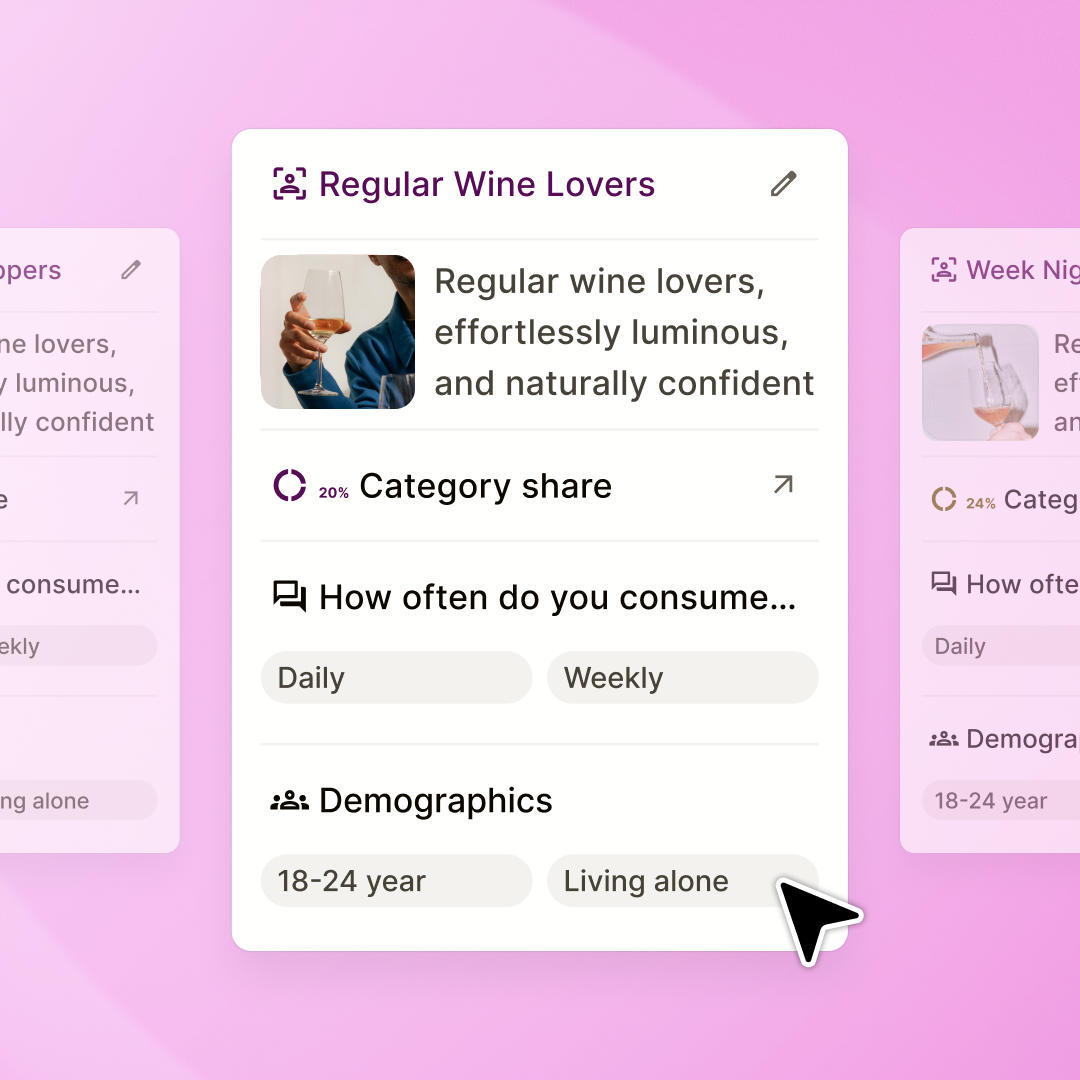
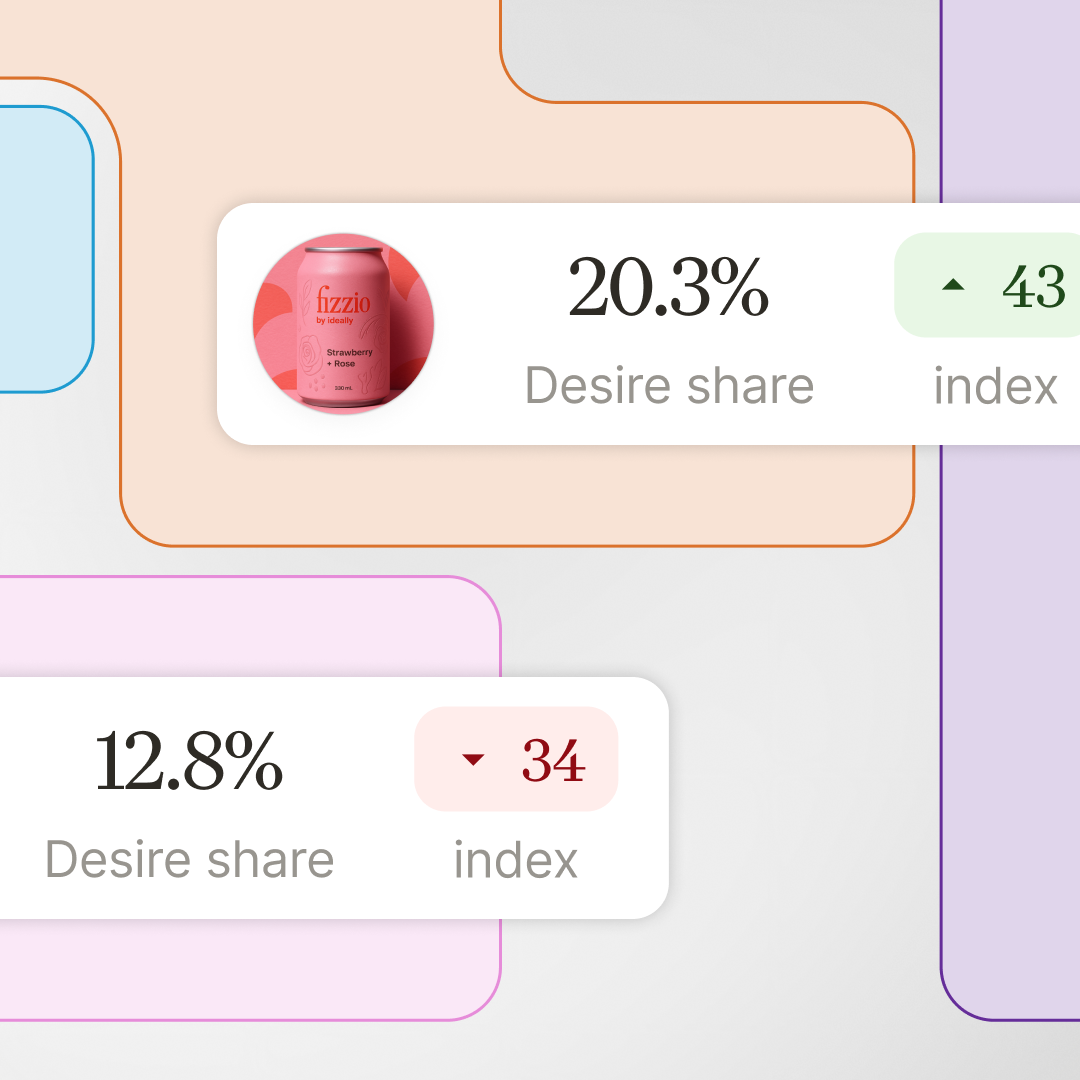
That's Ideally Canvas. Built on a shared language, a framework that makes the category click, and a design good enough that people actually want to open it. Insight, with influence, baked in from the start. A few weeks to build, then instant insight for anyone who opens it, expert or not. 10% of the cost.
Refreshed annually, or quarterly if your category moves fast. The kind of power that used to belong to a handful of big companies, now open to everyone, and built so it actually gets used. By the people asking the questions, and the people who've spent their careers answering them.
By Kurt Hately, Head of Product at Ideally