GLP-1's Reach Extends to Nearly 60% of Americans
Most brands have sized the GLP-1 opportunity by the people taking the drug. Our research suggests that is a missed opportunity.
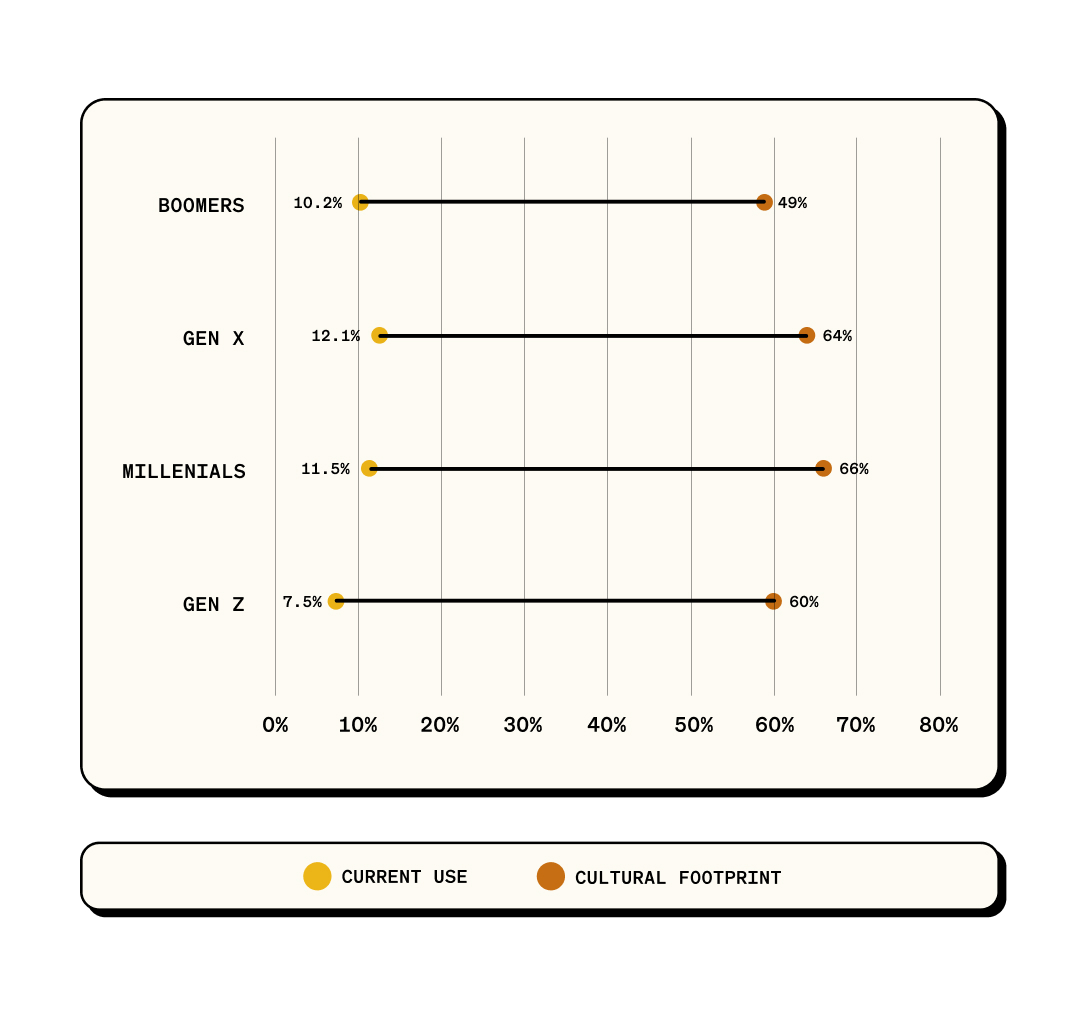
While about one in ten American adults are currently on a GLP-1, nearly six in ten now sit inside its footprint: people on it, people who have come off it, the quarter who would start if they could, and the people who live, shop and socialize alongside them.
We surveyed 2,184 US adults and found that the audience being influenced by GLP-1 is six times larger than the audience holding the prescription.
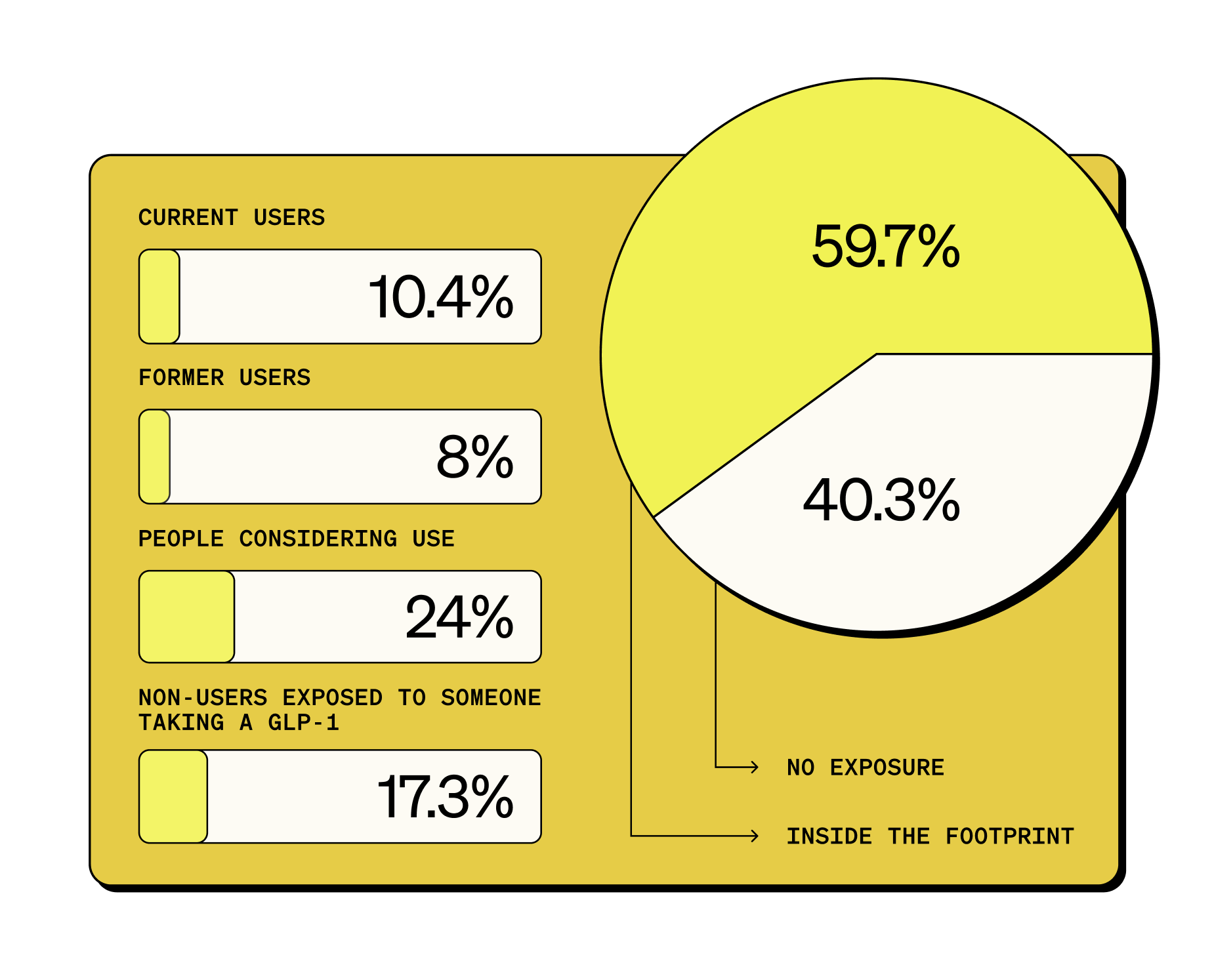

One in seven Americans now lives in a household with a GLP-1 user. Among non-users living with GLP-1 users, early signals point toward higher protein consumption, reduced alcohol consumption, more cooking at home and greater purchase of high-protein product alternatives.
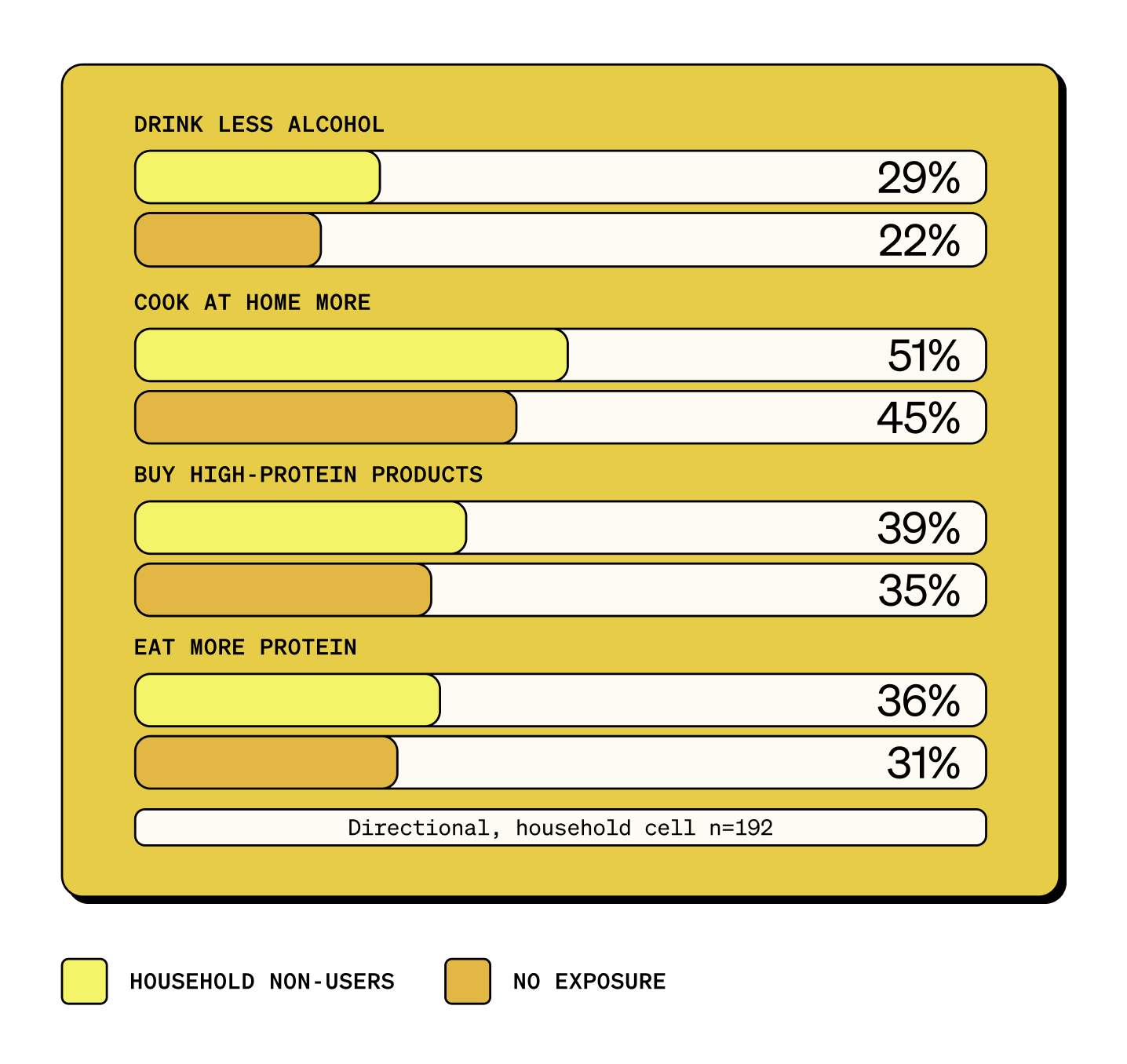
Non-users living with GLP-1 users are eating more protein, drinking less alcohol, cooking at home more often and buying higher-protein alternatives at greater rates than those with no exposure.
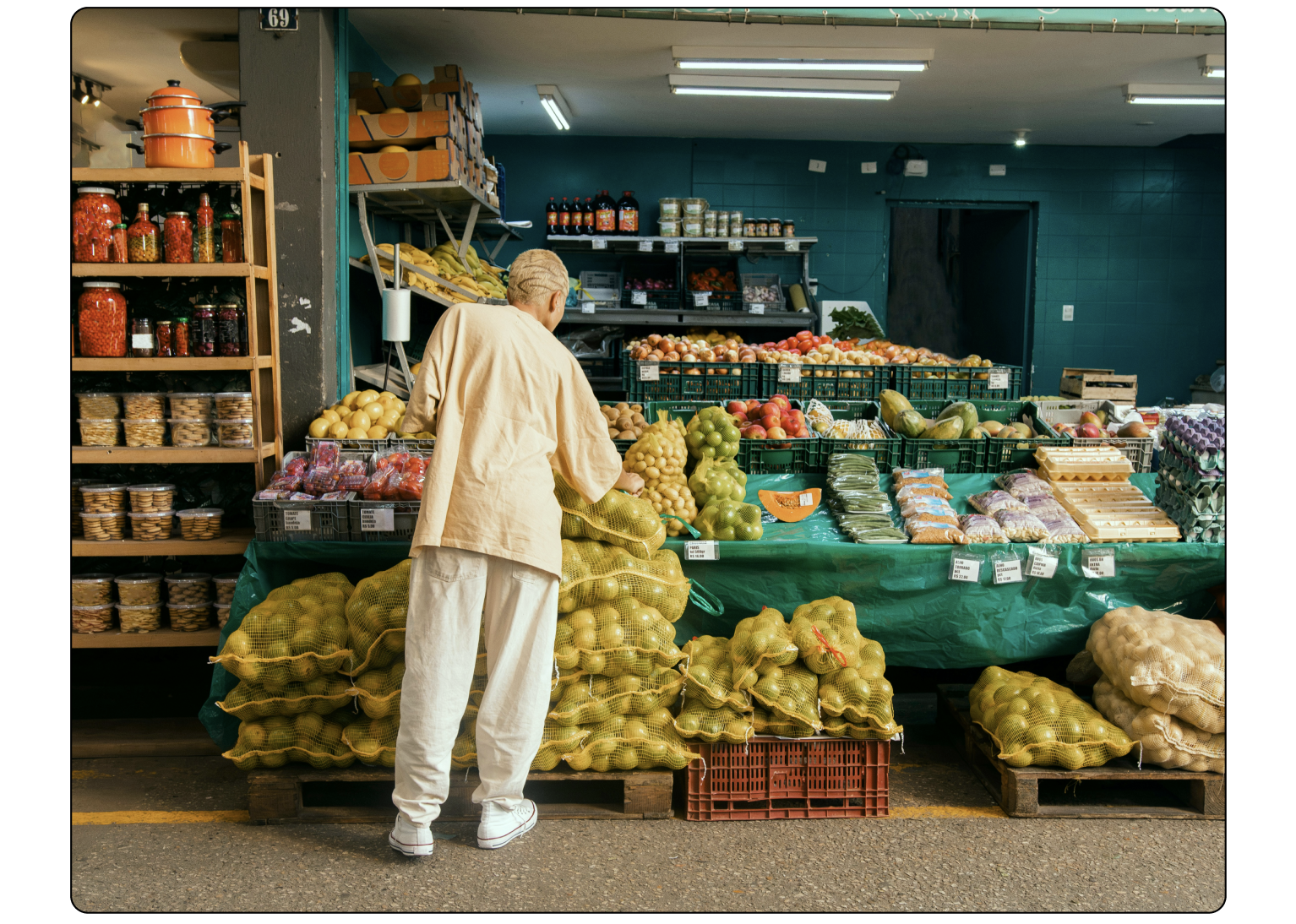
"We seek to have lower carb and lower sugar foods. We try to eliminate unnatural foods."
There was no mention of GLP-1, but they are buying around it anyway.
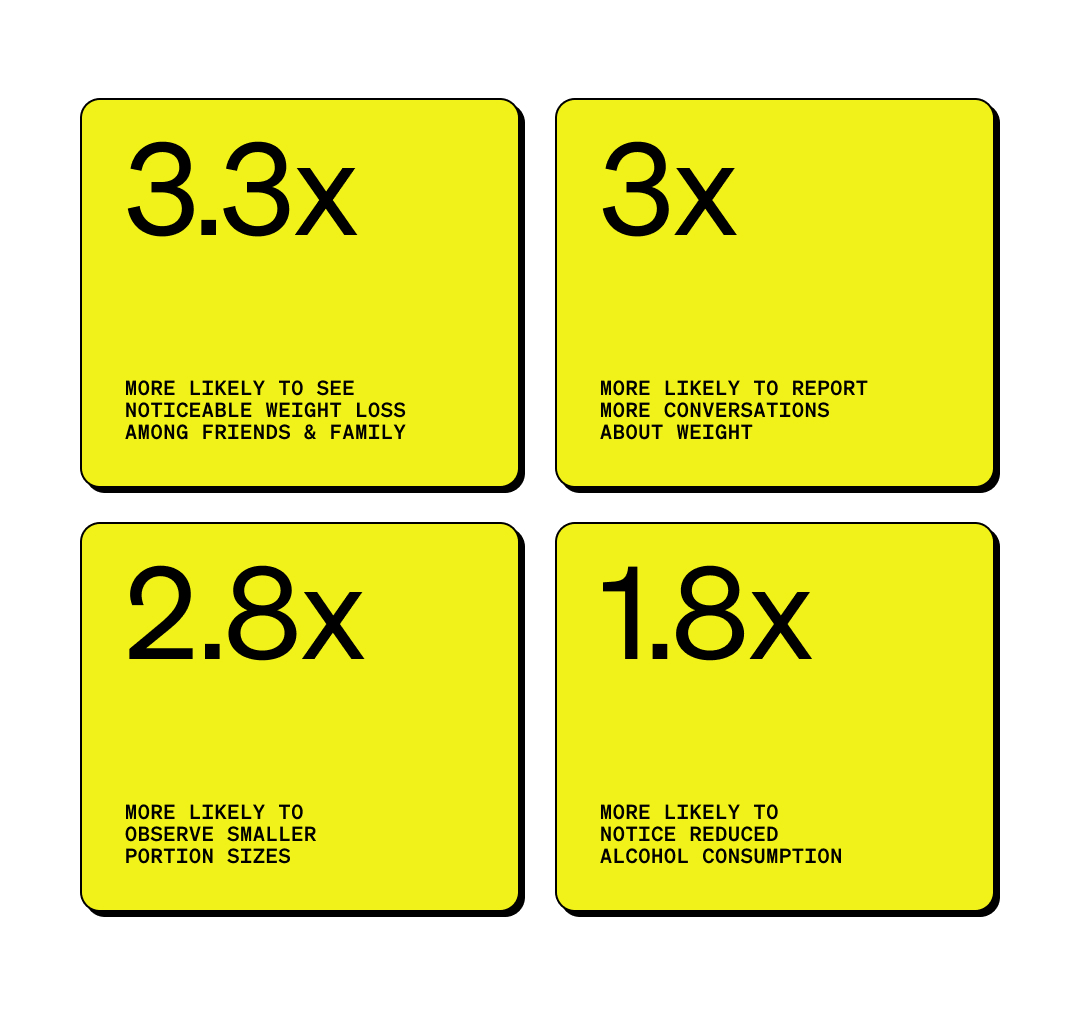
The strongest finding in our study was cultural. Non-users living with a GLP-1 user are more than three times as likely to have noticed friends or family losing weight. They're almost three times as likely to have seen people eating smaller portions and talking more about weight management.
People are watching before they're changing. They're absorbing new norms around portion sizes, protein, alcohol and health before they adopt those behaviors themselves.
For brands, that matters because cultural shifts always arrive before category shifts.
While GLP-1 use is concentrated among Gen X and Millennials, exposure is highest among younger consumers. Two-thirds of Millennials sit inside the GLP-1 footprint. So do nearly 60% of Gen Z.
Many are watching parents, partners, friends and colleagues take the drug rather than taking it themselves. They're shopping for households influenced by it. And they'll carry those behaviors into the next decade of consumption.
The brands that win will be the ones designing for the much larger audience adapting around GLP-1 users, rather than chasing the users alone.
This is the first in our new series analyzing how GLP-1s are reshaping the world around us. We'll be tracking the shift as it unfolds, with snacking and alcohol up next. If you want to see what's coming before it hits your shelf, get in touch.
Ideally surveyed 2,184 US adults in May 2026, weighted to be nationally representative. The study covered current GLP-1 users (10.4 percent of the weighted sample), lapsed users (8.0 percent), considerers (23.9 percent), non-users with a GLP-1 user in their household or social circle (17.3 percent), and non-users with no exposure (40.3 percent). For context, Gallup put current US usage at 12.4 percent in March 2026 and RAND at 11.8 percent in August 2025. Our current-user figure tracks slightly below those external benchmarks.